
What Are Chicken Paws Used For? Wholesale Chicken Paws, Chicken Feet Suppliers & Bulk Buying Guide
Chicken paws are an important poultry product in several international food markets. Although they are not consumed in the same way as chicken breast, wings or drumsticks, chicken paws are valued for their texture and their use in soups, broths, stews, braised dishes and other traditional preparations.
For importers, wholesalers, distributors, restaurants and food-service businesses, understanding what are chicken paws used for is important before purchasing them in bulk. Buyers also need to understand the difference between chicken paws and chicken feet, product specifications, cleaning requirements, packaging, freezing, cold-chain management and destination-market regulations.
The international market for chicken paws has created opportunities for poultry exporters and chicken feet suppliers that can provide consistent quality and appropriate documentation. Vibra Agroindustrial S/A presents itself as a Brazilian poultry producer and exporter supplying frozen chicken products to international markets. Its website states that Vibra exports to more than 70 countries and operates under Export SIF 2212, SIF 3170 and SIF 725, with additional international approvals listed on its website.
For commercial buyers, the most important factors are not simply price and volume. A successful chicken paws wholesale purchase also depends on product specification, processing, packaging, certification, cold-chain logistics, import eligibility and supplier communication.
Table of Contents
- What Are Chicken Paws?
- What Are Chicken Paws Used For?
- Chicken Paws vs Chicken Feet
- Why Are Chicken Paws Popular?
- Chicken Paws for Soups and Broths
- Chicken Paws for Stews and Braised Dishes
- Chicken Paws in Asian Cuisine
- Chicken Paws in Halal Food Markets
- Wholesale Chicken Paws
- Chicken Feet Wholesale Buying
- Chicken Feet Suppliers
- How to Choose a Chicken Feet Supplier
- Frozen Chicken Paws
- Chicken Paws Packaging
- Cold-Chain Management
- Buying Chicken Paws in Bulk
- Chicken Paws for Restaurants
- Chicken Paws for Supermarkets
- Chicken Paws for Food-Service Distributors
- Chicken Paws for International Importers
- Why Choose Vibra Agroindustrial S/A?
- Related Vibra Frozen Products
- How to Request a Chicken Paws Wholesale Quote
- FAQ About Chicken Paws
- Conclusion
What Are Chicken Paws?
Chicken paws are the lower part of a chicken’s leg below the ankle joint. They consist primarily of skin, connective tissue, tendons and bones rather than the substantial muscle found in breast or thigh meat.
Chicken paws are commonly processed, cleaned and frozen before being supplied to commercial markets.
The terminology can vary between countries. Some markets use the terms chicken paws, chicken feet, or frozen chicken feet for products that may have slightly different specifications.
Therefore, international buyers should never rely only on the product name.
A professional buyer should specify exactly what is required, including:
- Product name
- Size or weight range
- Cleaning specification
- Processing requirements
- Skin condition
- Nail/claw requirements
- Packaging
- Freezing method
- Net weight
- Country of origin
- Required certification
Vibra’s website specifically identifies Frozen Chicken Feet among its frozen-cut portfolio and markets its poultry range to international buyers.
What Are Chicken Paws Used For?
So, what are chicken paws used for?
Chicken paws are used in a wide range of culinary applications, particularly in markets where the texture of collagen-rich poultry skin and connective tissue is valued.
Common applications include:
- Soups
- Broths
- Stocks
- Stews
- Braised dishes
- Hot pots
- Traditional poultry recipes
- Restaurant dishes
- Catering
- Food-service preparations
- Specialty retail products
Chicken paws are particularly useful in dishes that involve extended cooking because slow cooking softens the connective tissues and produces a distinctive texture.
Vibra’s own export information identifies applications in food service, retail and processed foods, including soups, dumplings and specialty products.
Chicken Paws vs Chicken Feet
The terms chicken paws and chicken feet are sometimes used interchangeably, but buyers should confirm the exact specification with their supplier.
In commercial poultry trading, a buyer may encounter products described as:
- Chicken paws
- Chicken feet
- Frozen chicken feet
- Frozen chicken paws
- Chicken feet with claws
- Cleaned chicken feet
- Processed chicken feet
The physical specification can vary according to the destination market and customer requirements.
For example, a buyer may require a particular cleaning standard or a specific presentation.
The best practice is to request a product specification sheet and, where appropriate, product photographs or samples before finalizing a large shipment.
Why Are Chicken Paws Popular?
Chicken paws have a distinctive culinary profile.
Unlike conventional chicken cuts such as breast and thigh, paws contain relatively little muscle meat. Their commercial value is associated with the skin, connective tissue and texture they provide after cooking.
They can therefore be valuable ingredients for food businesses that specialize in traditional recipes.
Another consideration is resource utilization.
Using additional edible parts of the bird can increase utilization of the poultry carcass and create commercial value from portions that may have lower demand in some markets.
This can contribute to more efficient use of the poultry supply chain.
Chicken Paws for Soups and Broths
One of the most common applications for chicken paws is soup and broth preparation.
During extended cooking, connective tissues can contribute body and texture to the cooking liquid.
Restaurants may use chicken paws as an ingredient in:
- Chicken broth
- Traditional soups
- Noodle soups
- Hot pots
- Specialty stocks
- Mixed poultry broths
Food-service businesses can purchase frozen paws in bulk and use them according to their established recipes.
When buying for restaurant use, the buyer should consider how much product is required per week and how much freezer capacity is available.
Chicken Paws for Stews and Braised Dishes
Chicken paws can also be braised or cooked slowly in sauces and stews.
This preparation is common in various culinary traditions.
The paws can absorb the flavors of:
- Spices
- Soy-based sauces
- Garlic
- Ginger
- Chilli
- Herbs
- Broths
- Aromatic vegetables
The final preparation depends heavily on local culinary traditions.
For commercial restaurants, the main purchasing considerations are consistency, cleanliness, size, packaging and supply availability.
Chicken Paws in Asian Cuisine
Chicken paws are particularly recognized in several Asian food markets.
They can appear in:
- Dim sum
- Hot pots
- Braised dishes
- Soups
- Noodle preparations
- Street-food recipes
- Restaurant appetizers
- Traditional family dishes
Demand can vary considerably by country and region.
For exporters and importers, this means that understanding the destination market is important before purchasing large quantities.
A distributor supplying restaurants in one region may require a different specification from a distributor supplying supermarkets in another.
Chicken Paws in Halal Food Markets
Halal compliance is an important consideration for buyers serving Muslim consumers.
Chicken paws can be sold into halal markets when the poultry product, slaughter process, handling, processing and certification meet the applicable requirements.
Vibra’s website states that its poultry products include halal-compliant production and discusses halal frozen chicken paws for export.
However, buyers should always request current halal documentation from the supplier and verify that the certification is accepted in the destination country.
The buyer should confirm:
- Halal certificate
- Certifying organization
- Slaughter requirements
- Processing requirements
- Packaging
- Traceability
- Destination-country recognition
A product being described as “halal” online should not replace verification of the current certificate and applicable import requirements.
Wholesale Chicken Paws
Chicken paws wholesale purchasing is designed for commercial customers that require larger quantities.
Typical buyers include:
- Importers
- Poultry distributors
- Restaurants
- Supermarkets
- Food-service companies
- Catering businesses
- Meat wholesalers
- Specialty-food distributors
- Processors
Wholesale purchasing requires more planning than buying small consumer packs.
The buyer should know:
- Required quantity
- Product specification
- Destination country
- Destination port
- Packaging preference
- Required certification
- Storage capacity
- Expected sales volume
The larger the shipment, the more important it becomes to establish exact specifications before signing a purchase agreement.
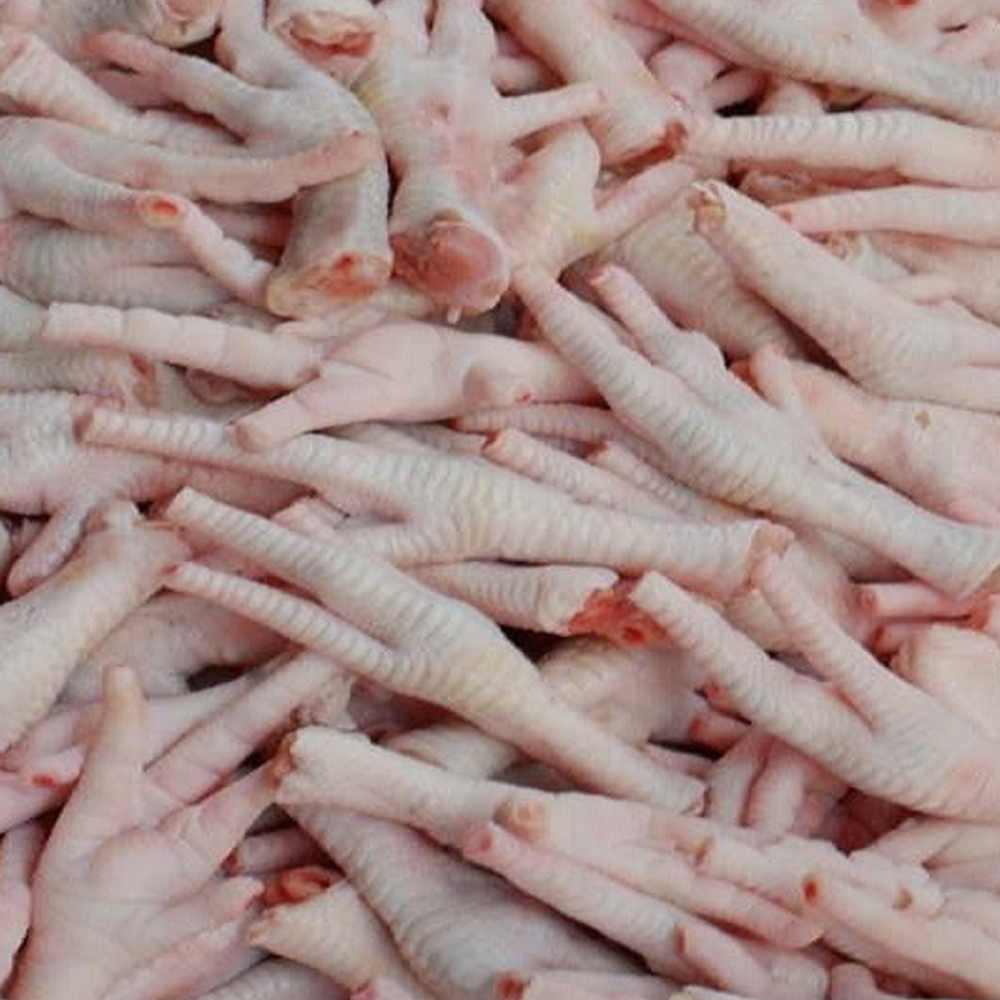
Chicken Feet Wholesale Buying
Chicken Feet Wholesale transactions are often based on carton or container quantities.
The supplier may provide different packaging options depending on the destination market.
A buyer should request information about:
- Carton net weight
- Gross weight
- Carton dimensions
- Number of cartons per pallet
- Pallet configuration
- Container capacity
- Product weight range
- Processing specification
- Storage temperature
- Shelf life
Do not assume that two suppliers offering “20 kg cartons” are supplying identical products.
The product inside the carton may have different specifications.
Chicken Feet Suppliers
Finding suitable chicken feet suppliers requires more than searching for the cheapest quotation.
A supplier evaluation should cover several areas.
Product Quality
Confirm exactly how the chicken feet are cleaned, processed and frozen.
Processing Facility
Determine where the product is manufactured and whether the facility is eligible to export to the intended destination.
Certifications
Request applicable health, food-safety and halal certificates where required.
Packaging
Verify that packaging meets the buyer’s handling and destination requirements.
Traceability
Ask how batches are identified and tracked.
Export Experience
An experienced exporter may understand the documentation and logistics required for international shipments.
Availability
Confirm whether the supplier can maintain supply for repeat orders.
How to Choose a Chicken Feet Supplier
Before selecting a supplier, compare the complete commercial offer.
1. Confirm the Product
Ask whether the supplier offers chicken paws, chicken feet or another poultry cut.
2. Confirm the Specification
Request the exact size, cleaning and processing specification.
3. Request Photos or Samples
For large purchases, product samples can help buyers verify the specification before committing to a larger order.
4. Verify Certification
Request current certification relevant to the destination market.
5. Confirm Packaging
Ask about carton weight, pallet configuration and container loading.
6. Confirm Price Basis
A quotation should clearly identify whether the price is FOB, CIF or another Incoterm.
7. Confirm Availability
Ask whether the product is available for immediate shipment or requires production scheduling.
8. Verify Import Eligibility
The buyer should independently confirm that the supplier and product are eligible for import into the destination country.
Frozen Chicken Paws
Frozen chicken paws are commonly used for international trade because freezing allows the product to be stored and transported under controlled conditions.
The cold chain must be maintained throughout:
- Processing
- Freezing
- Storage
- Loading
- Ocean transportation
- Port handling
- Customs clearance
- Inland transportation
- Distributor storage
Vibra’s frozen-product pages describe frozen storage and commercial export arrangements across its product range. Its whole-chicken page, for example, describes frozen products, packaging and international shipping options.
The exact storage temperature and shelf-life specification for chicken paws should be confirmed from the product’s current technical documentation.
Chicken Paws Packaging
Packaging is an important part of any wholesale poultry transaction.
Commercial buyers should confirm:
- Net weight per carton
- Number of inner bags
- Gross weight
- Carton dimensions
- Pallet configuration
- Product labeling
- Lot identification
- Production date
- Expiration or best-before information
- Country of origin
- Required certification marks
Vibra’s website shows that its frozen poultry products can be supplied in commercial carton formats and that packaging specifications vary by product.
Never assume that the packaging of one Vibra product is identical to another. Confirm the specification for the exact SKU being purchased.
Cold-Chain Management
Frozen chicken paws must remain within the required cold-chain conditions.
The supply chain may involve several companies, including:
- Producer
- Exporter
- Freight forwarder
- Shipping line
- Port operator
- Customs broker
- Importer
- Cold-storage warehouse
- Distributor
Each stage needs appropriate procedures.
A buyer should request information about the expected transport temperature and monitoring process.
On arrival, the receiving team should check:
- Carton condition
- Product condition
- Quantity
- Labels
- Lot information
- Temperature records
- Shipping documentation
Any significant discrepancy should be documented immediately.
Buying Chicken Paws in Bulk
Buying chicken paws bulk quantities can be appropriate for importers and distributors with established demand.
Before ordering a full container, calculate expected sales.
Consider:
- Existing customer orders
- Monthly sales
- Warehouse capacity
- Freezer capacity
- Distribution network
- Product shelf life
- Cash flow
- Import costs
- Freight
- Customs charges
A bulk order should be based on realistic demand rather than simply the availability of a low price.
Chicken Paws for Restaurants
Restaurants can use chicken paws in soups, broths, hot pots, braised dishes and specialty menu items.
Restaurant buyers should consider:
- Weekly consumption
- Product size
- Cleaning specification
- Packaging
- Freezer capacity
- Delivery schedule
- Customer demand
If a restaurant uses 50 kg per week, purchasing an unnecessarily large quantity may create storage and inventory-management challenges.
A reliable supplier should be able to discuss suitable commercial quantities.
Chicken Paws for Supermarkets
Supermarkets can sell chicken paws as frozen specialty products.
Retail presentation may require:
- Consumer-sized packaging
- Clear labeling
- Country-of-origin information
- Storage instructions
- Barcodes
- Net weight
- Product description
- Halal information where applicable
Retailers should make sure labels comply with the laws of the destination market.
Chicken Paws for Food-Service Distributors
Food-service distributors can purchase bulk chicken paws and supply restaurants, catering companies, hotels and institutional kitchens.
Distributors need consistent specifications because their customers may order the same product repeatedly.
Important factors include:
- Consistent size
- Consistent cleaning
- Reliable packaging
- Predictable supply
- Documentation
- Competitive landed cost
- Delivery reliability
A distributor should communicate its customer requirements to the supplier before placing an order.
Chicken Paws for International Importers
International importers should treat chicken paws as a regulated animal-origin food product.
Requirements vary by destination country.
Depending on the market, importers may need:
- Health certificates
- Veterinary documents
- Halal certification
- Certificate of origin
- Establishment approval
- Customs documents
- Product labels
- Inspection records
- Other destination-specific permits
The importer is responsible for confirming current requirements with the relevant authorities.
Why Choose Vibra Agroindustrial S/A?
Vibra Agroindustrial S/A presents itself on its website as a Brazilian poultry producer and exporter with a broad frozen-food portfolio. The company says its products are exported to more than 70 countries.
For buyers interested specifically in chicken paws and chicken feet, the company has dedicated information about frozen chicken feet and halal frozen chicken paws.
International Export Experience
Vibra states that it serves international markets and lists export inspection establishments including SIF 2212, SIF 3170 and SIF 725.
For an importer, establishment and export eligibility should always be checked against the current requirements of the destination country.
Quality Control
Vibra’s quality page describes inspections throughout production and states that its operations are reviewed by Brazil’s Federal Inspection Service.
The company also describes HACCP, GMP and PPHO practices on its website.
Broad Product Portfolio
Another consideration for distributors is the broader product range.
Vibra’s website lists frozen chicken, beef, duck, pork and turkey categories.
This can be useful for importers looking to investigate multiple poultry or meat products from one supplier.
Halal Product Options
Vibra specifically markets halal frozen chicken paws for international buyers and emphasizes certification, traceability, packaging and cold-chain considerations.
Buyers should obtain current certificates and confirm destination-market recognition before placing an order.
Related Vibra Frozen Products
If you are researching chicken feet wholesale or building a broader frozen poultry portfolio, Vibra’s website contains information on several related products.
1. Frozen Chicken Feet
Vibra’s homepage specifically lists Frozen Chicken Feet among its frozen cuts and identifies the company as a Brazilian frozen chicken feet and chicken paws supplier.
2. Whole Frozen Chicken
Whole Frozen Chicken is another major poultry product listed by Vibra. The product page provides weight ranges, packaging information and frozen-storage details.
3. Frozen Chicken Breast
Vibra lists Frozen Chicken Breast for wholesale and bulk purchasing, with product-quality and packaging information on its product page.
4. Halal Frozen Turkey Wings
For distributors looking beyond chicken, Vibra also lists Halal Frozen Turkey Wings with commercial frozen packaging and export information.
Explore Halal Frozen Turkey Wings
5. Frozen Beef Heart
Frozen Beef Heart is another product in Vibra’s broader frozen-meat portfolio, with BQF freezing and 10 kg, 15 kg and 20 kg carton formats listed on the product page.
6. Frozen Beef Omasum
Vibra also lists Frozen Beef Omasum for wholesale buyers, with frozen storage and commercial carton packaging.
7. Frozen Pork Rind
Frozen Pork Rind is another product listed by Vibra, providing an additional option for importers purchasing a wider range of animal-protein products.
8. Frozen Chicken Paws Export Information
Vibra has also published dedicated information about halal frozen chicken paws, including product specifications buyers should verify, cold-chain considerations, documentation and potential food-service and retail applications.
Explore Frozen Chicken Paws for Export
How to Request a Chicken Paws Wholesale Quote
When contacting a chicken feet supplier, provide enough information to receive a useful commercial quotation.
A professional RFQ could include:
Product: Frozen Chicken Paws / Chicken Feet
Quantity: [Required MT]
Specification: [Size/cleaning requirements]
Packaging: [Required carton weight]
Destination Country: [Country]
Destination Port: [Port]
Incoterm: FOB / CIF
Halal Requirement: Yes/No
Required Documents: [List]
Target Shipment: [Month]
You can also request:
- Product specification sheet
- Current price
- Minimum order quantity
- Packing details
- Pallet configuration
- Container loading information
- Production lead time
- Shelf-life information
- Health certificate
- Halal certificate, if applicable
- Certificate of origin
- Establishment information
This allows buyers to compare suppliers based on the complete commercial offer.
What Should Buyers Check Before Ordering?
Before paying for a large shipment, verify the following:
Product Specification
Make sure the supplier understands exactly what you want.
Certification
Request current certificates rather than relying on old documents.
Export Eligibility
Confirm that the establishment and product are eligible for your country.
Packaging
Confirm carton weight and dimensions.
Quantity
Ensure the supplier can provide the requested volume.
Price
Clarify whether the quotation is FOB, CIF or another Incoterm.
Payment
Confirm payment terms and banking procedures through the supplier’s official commercial channels.
Logistics
Confirm the intended shipping route and reefer requirements.
Cold Chain
Ensure responsibilities for temperature control are clear.
FAQ About Chicken Paws
What are chicken paws used for?
Chicken paws are commonly used in soups, broths, stews, braised dishes, hot pots and other traditional recipes. They are also used by restaurants, food-service companies, specialty retailers and food manufacturers.
Are chicken paws the same as chicken feet?
The terms are often used interchangeably in international trade, but commercial specifications can differ. Buyers should confirm the exact product definition, cleaning requirements and presentation with the supplier.
Why are chicken paws popular?
Chicken paws contain skin, connective tissue and bones and are valued for their distinctive texture when cooked. They are particularly important in culinary traditions where chicken feet are used in soups, stews and braised dishes.
Can I buy chicken paws wholesale?
Yes. Chicken paws can be purchased in commercial quantities by importers, distributors, restaurants, supermarkets and food-service businesses, subject to supplier availability and destination-market requirements.
What are chicken feet wholesale products?
Chicken feet wholesale products are commercial quantities of processed chicken feet intended for restaurants, distributors, retailers, food-service businesses and international importers.
How do I find chicken feet suppliers?
Look for suppliers with clear product specifications, export capability, appropriate certifications, traceability, suitable packaging and experience with international frozen-food logistics.
Are frozen chicken paws available for export?
Yes. Vibra Agroindustrial S/A specifically publishes information about halal frozen chicken paws available for international export.
Are chicken paws suitable for halal markets?
Chicken paws can be supplied to halal markets when the poultry is produced, slaughtered, handled and certified according to the applicable halal requirements. Buyers should verify the current certificate and destination-country recognition.
How should frozen chicken paws be stored?
Frozen chicken paws should be stored according to the supplier’s stated temperature and storage requirements. The cold chain should be maintained throughout transportation, storage and distribution.
What packaging is used for chicken paws?
Packaging varies according to supplier and market. Buyers should confirm carton weight, inner packaging, pallet configuration, labeling and container-loading specifications before ordering.
Can restaurants buy chicken paws in bulk?
Yes. Restaurants can purchase chicken paws in bulk when they have sufficient demand and frozen-storage capacity.
Can supermarkets sell chicken paws?
Yes. Chicken paws can be sold through supermarkets and specialty food stores where permitted by local regulations and where the product is properly labeled and packaged.
What documents are needed to import chicken paws?
Requirements vary by country. Depending on the destination, documents can include health certificates, veterinary documentation, certificates of origin, halal certificates, establishment approvals and customs paperwork.
What should I ask a chicken feet supplier?
Ask about product size, cleaning, processing, packaging, freezing, storage, shelf life, certification, quantity, price, minimum order, shipping terms and export eligibility.
Does Vibra Agroindustrial S/A supply chicken feet?
Vibra’s website lists Frozen Chicken Feet among its frozen poultry products and describes the company as a Brazilian frozen chicken feet and chicken paws supplier.
Does Vibra Agroindustrial S/A export chicken paws?
Vibra has a dedicated page describing halal frozen chicken paws for export and discusses international logistics, certification, packaging and potential applications.
How many countries does Vibra export to?
Vibra’s website states that its products are exported to more than 70 countries.
What certifications does Vibra mention?
Vibra’s website references HACCP, GMP and PPHO practices and identifies Export SIF 2212, SIF 3170 and SIF 725, along with other international approvals. Buyers should confirm the current certification applicable to their specific product and destination.
Conclusion: What Are Chicken Paws Used For?
So, what are chicken paws used for?
Chicken paws are used primarily in soups, broths, stews, braised dishes, hot pots and other traditional culinary preparations. They are valued for their characteristic texture and their suitability for slow-cooked recipes.
For international buyers, chicken paws wholesale can be an important commercial opportunity when there is established demand in the destination market. However, successful purchasing depends on more than finding a low price.
Importers should carefully evaluate chicken feet suppliers based on product specification, cleaning and processing standards, packaging, certification, export eligibility, cold-chain capability and documentation.
Frozen chicken paws can provide a practical format for international distribution when the cold chain is properly maintained. Buyers should also confirm the current product specification, shelf life and storage requirements directly with the supplier.
Vibra Agroindustrial S/A presents a broad Brazilian poultry and frozen-meat portfolio and specifically lists Frozen Chicken Feet and information about halal frozen chicken paws for export. Its website states that the company exports to more than 70 countries and operates with Federal Inspection Service oversight and listed export establishments.
For buyers looking for Chicken Feet Wholesale, the best starting point is a detailed RFQ containing the required quantity, product specification, packaging, destination port, certification requirements and preferred shipping terms.
Whether you are an importer, wholesaler, supermarket, restaurant, food-service distributor or specialty-food supplier, understanding the exact application of chicken paws and verifying the complete supply chain can help you make a more informed purchasing decision.